
Burst Pipe Water Damage
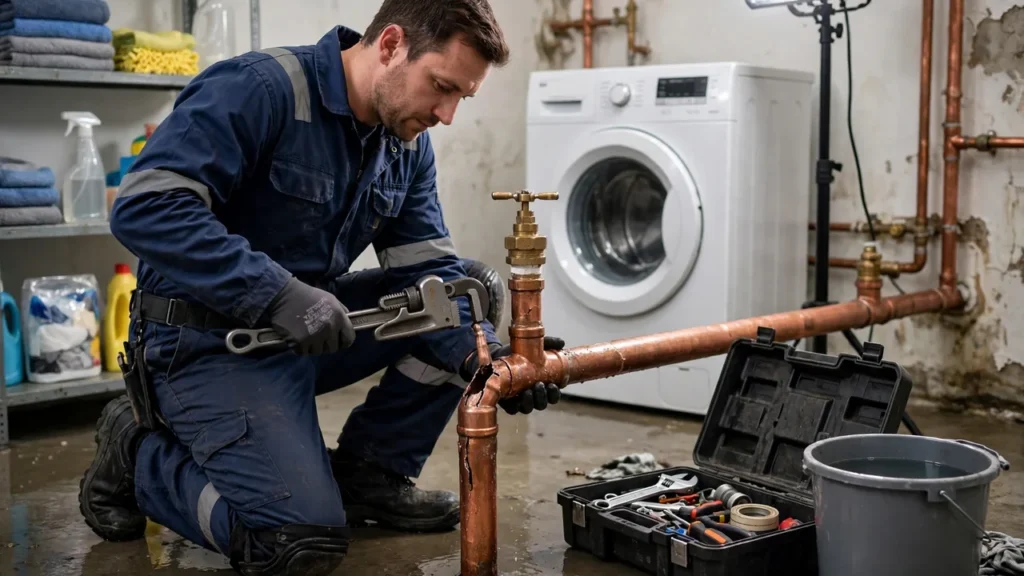
A burst pipe can release hundreds of gallons before anyone notices. Local pros dry the obvious damage, trace where the water traveled inside walls and floors, and stop mold before it starts.
📞 Call Now - 24/7 Help: +1 (844) 954-0617What burst pipe restoration does
Burst pipe restoration handles everything the water did after the pipe failed – extraction, drying of walls, floors and ceilings, and repair of the materials the water ruined. The plumbing fix stops the leak; restoration makes the home dry, safe and whole again.
Pipe water is sneaky. It runs downhill inside wall cavities, pools on the ceiling below, and wicks sideways through insulation and subfloor – so the wettest part of your home is often a room away from the pipe itself. A stain on the kitchen ceiling may start at a bathroom pipe one floor up and three rooms over.
That is why pros do not just dry the room with the puddle. They trace the water’s path with moisture meters and thermal imaging, open small inspection points where needed, and dry every cavity the water reached.
Signs a pipe has burst or is leaking
Some bursts announce themselves. Others leak quietly for weeks. Watch for:
- A sudden drop in water pressure – or a water bill that jumps for no reason.
- The sound of running water when nothing in the house is turned on.
- Wet spots, stains or bubbling paint on walls or ceilings.
- Warped flooring, or a spongy feeling underfoot near a wall.
- A musty smell in one room, cabinet or closet.
- Visible flooding from a frozen pipe, a water heater or an appliance hose.
If a pipe is actively bursting, shut off your main water valve first, then call. Every minute the water runs, the restoration job gets bigger – a fast shutoff is the single most valuable thing you can do.
How our burst pipe restoration process works
Stop the source
If water is still running, it gets shut off at the main valve. If the pipe is not yet repaired, the pro coordinates timing with your plumber so drying is not undone by a second leak.
Trace the water
Moisture meters and thermal imaging map where the water traveled – inside walls, under floors, into the ceiling below – so nothing wet is left behind.
Extract and open up
Standing water is extracted. Where cavities are soaked, small planned openings – a removed baseboard, a small inspection cut – let drying air reach the wet structure.
Dry everything the water touched
Air movers and dehumidifiers dry the rooms and the cavities, with daily readings until every material reaches its dry standard.
Repair and document
Damaged drywall, insulation and flooring are repaired or replaced, and the whole job – cause, photos, readings – is documented for your insurance claim.
What affects the cost of burst pipe restoration
Burst pipe jobs range from a few hundred dollars of drying for a small, fast-caught leak to many thousands when water ran for days through several rooms. The pipe repair itself is a separate plumbing cost. For the restoration side, four factors set the price:
| Cost factor | Why it matters |
|---|---|
| Size of the affected area | A single-room leak dries fast. Water that reached multiple rooms, floors, or the ceiling below multiplies equipment and repair work. |
| Type of water | Pipe water starts clean, which keeps costs down – unless it sat long enough to pick up contaminants or grow mold along the way. |
| How long the water ran | A pipe that ran all weekend does far more damage than one caught within the hour. Run time is the biggest cost lever you have. |
| Materials damaged | Drywall and insulation are quick to dry and replace. Hardwood, cabinets and built-ins take longer and cost more to repair. |
Get the restoration estimate on site and in writing, and keep your plumber’s invoice with it – insurers usually want both halves of the story.
Frequently asked questions
Who do I call first – a plumber or a restoration pro?
Stop the water first, at the main shutoff. After that, both, in either order. The plumber fixes the pipe; the restoration pro handles the water damage – different trades, different invoices. If water is still spreading through walls or ceilings, call restoration the same day, even if the plumber cannot come until tomorrow.
Does insurance cover burst pipe water damage?
Usually, yes. Most homeowners policies cover sudden and accidental pipe failures, including the resulting water damage, drying and repairs. What they often do not cover is the pipe repair itself, or damage from a leak that dripped unnoticed for months. Fast action and good documentation – photos, readings, invoices – protect your claim.
How can I tell where the water went inside my walls?
Honestly, you cannot – not reliably. Water follows framing, wiring and gravity, and it pools where you would not guess. Pros use pin and pinless moisture meters and thermal cameras to read inside the wall without tearing it open. That map decides where the drying equipment goes, and whether a small inspection opening is needed.
What if the pipe burst because it froze?
Frozen-pipe bursts are handled the same way once the water is off: extract, trace, dry, repair. The extra step is prevention – the pro can show you which runs froze and why, and your plumber can insulate or reroute them. While you wait for help, keep the home heated; other pipes may be close to freezing too.
Will you have to tear out my walls?
Only where the water actually went, and only as much as drying requires. Many wall cavities dry in place with directed airflow through small openings behind baseboards. Drywall that stayed saturated, or insulation that soaked and slumped, does need to come out – keeping it costs far more in mold later.
One pipe can flood a home in hours
The pipe is only the start of the story. Get the water it left behind found, dried and documented – call a local pro now.
📞 Call Now for 24/7 Help: +1 (844) 954-0617