
Structural Drying & Dehumidification
A room can look dry while its walls are still wet inside. Local drying pros place industrial air movers and dehumidifiers, then prove the structure dry with moisture meters before they leave.
📞 Call Now - 24/7 Help: +1 (844) 954-0617What structural drying does
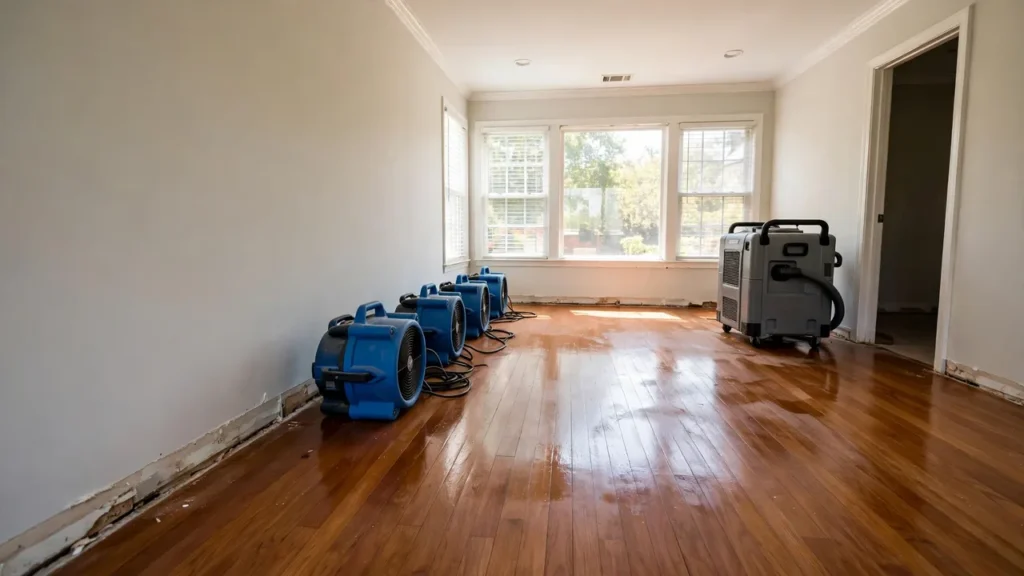
Structural drying removes the moisture extraction cannot reach – the water soaked into drywall, studs, subfloors, insulation and concrete. Crews combine high-velocity air movers, commercial dehumidifiers and controlled heat, and they manage the setup daily against moisture-meter readings, not guesswork.
Evaporation is the slow part of every water job. Air movers push dry air across wet surfaces so moisture leaves the material; dehumidifiers pull that moisture out of the air so it cannot settle back in. The number of machines and where they stand is a calculated decision based on room size, materials and readings.
Drying is also where the mold battle is won or lost. Mold can start growing within 24 to 48 hours on wet drywall and wood. A structure that reaches verified dry standards in a few days rarely needs a remediation job at all.
When you need professional drying
Surface dry is not structure dry. If any of these signs are present, moisture is still inside the building materials, doing quiet damage:
- Walls feel soft, look stained, or show bubbling paint after a leak or flood.
- Floors are cupping, warping or lifting after water damage.
- A musty smell lingers days after the visible water is gone.
- Your home feels humid and will not dry out with fans and open windows.
- Baseboards are separating from the wall, or doors have started to stick.
- An adjuster or inspector has found elevated moisture readings in your walls or floors.
None of these fix themselves. Wet cavities stay wet for weeks without equipment, and every week raises the odds of mold, rot, and a much bigger repair bill.
How our structural drying process works
Moisture mapping
The crew probes walls, floors and cabinets with moisture meters – and thermal imaging where useful – to draw the real map of what is wet. It is almost always bigger than what you can see.
Drying plan and setup
Based on the map, the pro calculates the air movers and dehumidification the space needs and places them to push moisture out of the materials and into the air.
Controlled drying
Equipment runs around the clock. Containment plastic and directed airflow keep the drying focused on the wet structure instead of the whole house.
Daily monitoring
Each day the crew takes new readings, adjusts equipment positions, and confirms moisture levels are falling on schedule. Readings are logged for your records and your insurer.
Verified dry sign-off
Work ends when materials reach their dry standard – not when they feel dry to the touch. You get the final readings, and repairs can start safely.
What affects the cost of structural drying
Drying is priced mostly by equipment days: how many machines, running for how long, across how much structure. It is also the stage that decides whether your job ends with drying alone or grows into demolition and rebuilding – so it is not the stage to cut short. Four factors drive the cost:
| Cost factor | Why it matters |
|---|---|
| Size of the affected area | Larger wet areas need more air movers, more dehumidifiers, and more monitoring visits. |
| Type of water | Clean-water drying is straightforward. After dirty water or sewage, sanitizing and protective steps are added before and during drying. |
| How long the water sat | The longer materials stayed wet, the deeper moisture penetrated – and the longer the dry-out takes. Late starts also risk adding mold work. |
| Materials damaged | Drywall and carpet dry in days. Hardwood, plaster, concrete and insulation hold moisture longer and may need specialty drying systems. |
Get the estimate and the drying plan in writing. A good pro can state the target readings and the expected number of days before the first machine is switched on.
Frequently asked questions
How long does structural drying take?
Most homes dry in 3 to 5 days. Small, clean-water jobs can finish in 2 days; hardwood floors, plaster walls and concrete can take a week or more. The crew confirms the timeline with daily meter readings rather than a guess, and the equipment stays until readings hit the dry standard.
Can I dry my home with household fans and a rented dehumidifier?
For a small spill on a hard floor, yes. For water inside walls or under floors, household fans move air across surfaces but cannot pull moisture out of cavities, and a home dehumidifier removes a fraction of what a commercial unit does. The usual result is a room that feels dry on top and still grows mold underneath – which costs far more to fix than proper drying would have.
Is the drying equipment loud? Can we sleep here?
Air movers sound like strong fans, and most families sleep through them, especially with bedroom doors closed. Crews can sometimes consolidate equipment away from bedrooms at night. If the water was contaminated, or power has to stay off, the pro may recommend staying elsewhere until the space is sanitized.
Will drying save my hardwood floors?
Often, yes – if it starts fast. Specialty floor-drying systems pull moisture through the boards and can save floors that look ruined. The deciding factors are how long the wood stayed wet and how much it has cupped. Boards that sat saturated for many days usually have some sections that need replacing, even with professional drying.
How do I know my home is really dry?
Ask for the readings. Pros measure the moisture content of the actual materials – studs, subfloor, drywall – and compare them with the dry standard for that material. A drying log with falling readings, ending at standard, is the proof. “It feels dry” is not a measurement.
Hidden moisture does quiet damage
The water you cannot see is the water that grows mold and rots framing. Get it measured and dried properly – call a local drying pro now.
📞 Call Now for 24/7 Help: +1 (844) 954-0617