
Mold Remediation
Mold is a moisture problem with a visible symptom. Local remediation pros find where it is growing, contain it, remove it safely, and fix the moisture source so it does not come back.
📞 Call Now - 24/7 Help: +1 (844) 954-0617What mold remediation does
Mold remediation is the controlled removal of mold growth from a building: inspection to find all of it, containment so spores do not spread during the work, removal of moldy material, HEPA cleaning of surfaces and air, and correction of the moisture problem that fed it. Painting over mold, or spraying it and leaving it in place, is not remediation.
Mold needs three things: spores, which are always present; food, which is drywall paper, wood and dust; and moisture. You cannot remove spores from the world, and your home is built of mold food – so moisture is the lever. That is why real remediation always ends with the water source: a fixed leak, a dried structure, a humidity problem solved.
The work is containment-first because disturbing mold releases spores. A crew that skips containment can turn a one-room problem into a whole-house one – which is the most common way DIY mold jobs go wrong.
Signs you may need mold remediation
Surface mold on shower grout is a cleaning chore. Mold that spreads, returns, or follows water damage is a remediation question – especially when:
- Visible mold patches are growing on walls, ceilings, grout or around windows.
- A musty, earthy smell does not go away with cleaning.
- Mold keeps coming back in the same spot after you wipe it down.
- Your home had water damage – a leak, a flood, a condensation problem – in the last weeks or months.
- Peeling paint, warped trim or staining suggests moisture inside a wall.
- Allergy-type symptoms ease when you leave the house and return when you come back.
The size rule pros use: if the patch is bigger than a dinner plate, or you cannot see where the growth ends, it is worth a professional inspection before you touch it.
How our mold remediation process works
Inspection and moisture check
The pro finds the visible growth and the moisture feeding it, checks the likely hidden spots – behind walls, under flooring, in the attic or crawl space – and defines the work area.
Containment
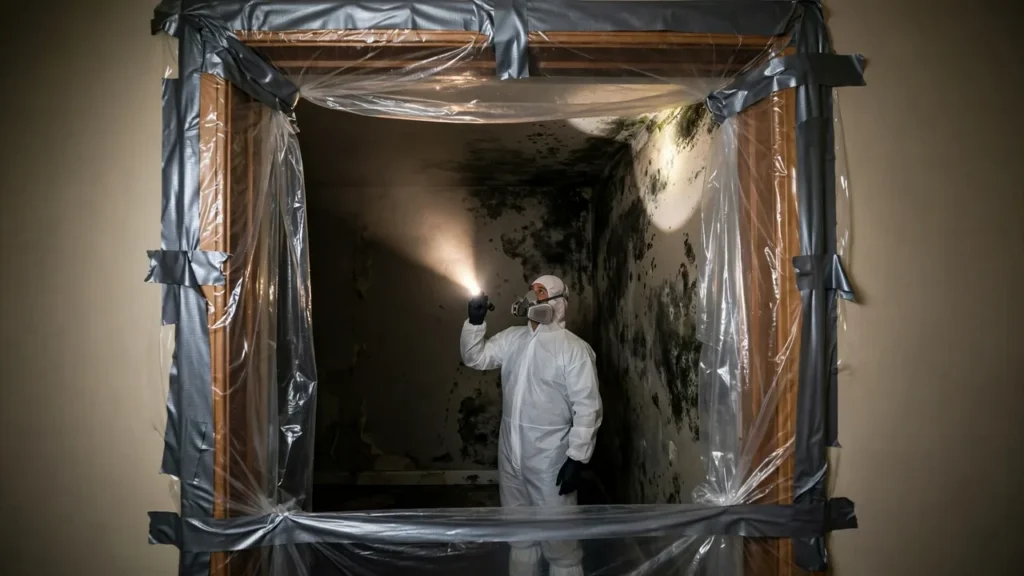
The area is sealed with plastic barriers and run under negative air pressure with HEPA filtration, so spores released during removal are captured instead of spreading.
Removal
Moldy porous material – drywall, insulation, carpet inside the zone – is removed and bagged within containment. Solid materials like framing are cleaned and treated in place.
HEPA cleaning
Surfaces are HEPA-vacuumed and wiped down, and the air is scrubbed, working from the contained area outward until the space is back to a normal standard.
Fix the moisture, then rebuild
The leak or humidity source is corrected and the structure dried. Only then are walls closed and finishes restored – rebuilding over a wet wall just schedules the sequel.
What affects the cost of mold remediation
Remediation is priced by the size of the contained area and how much material has to come out. A small bathroom corner and a finished basement with mold behind every wall are very different amounts of work. Four factors drive your estimate:
| Cost factor | Why it matters |
|---|---|
| Size of the affected area | Costs follow the square footage under containment and the amount of material removed and replaced. |
| How the mold started | Mold from a single clean leak is usually local. Mold fed by sewage or long-standing flooding arrives with more contamination and more tear-out. |
| How long the water sat | Mold grows with time. A two-week-old patch is often a surface job; growth fed for months has usually spread behind walls and into cavities. |
| Materials damaged | Tile and sealed surfaces clean in place. Drywall, insulation and carpet inside the growth zone must be removed, and framing needs cleaning and treatment. |
Get the scope in writing before work starts: the area, what gets removed, and how the moisture source will be fixed. Be wary of any quote given without an inspection.
Frequently asked questions
Is mold remediation covered by insurance?
Sometimes. Mold is usually covered only when it resulted from a covered water event – a burst pipe, for example – and even then many policies cap mold coverage at a set amount. Mold from long-term leaks, humidity or poor maintenance is generally excluded. The pro’s inspection report, photos and moisture readings are the evidence your claim stands on.
Can I remove mold myself?
Small surface patches – under about 10 square feet – on hard surfaces can be a homeowner job with proper protection. Anything bigger, anything inside walls or HVAC, anything after sewage, and anything that keeps returning should be handled by pros. The danger is not the cleaning; it is spreading spores through the home while you work, which untrained removal does easily.
Do I need a mold test?
Usually not. If you can see mold, the job is to remove it and fix the moisture – a test rarely changes that plan, and pros treat all mold growth the same way regardless of type. Testing can help when growth is suspected but not found, or when documentation is needed for an insurer, a landlord or a health question. Be cautious of anyone who insists on expensive testing before any work.
How long does mold remediation take?
A small contained area often takes 1 to 2 days, including drying. Larger jobs – multiple rooms, HVAC involvement, heavy tear-out – run 3 to 5 days or more, and rebuilding the removed material is a separate phase afterwards. Your pro should give you the timeline in the written scope before starting.
Will the mold come back after remediation?
Not if the moisture is fixed. Remediation removes the growth and the contaminated material, and the source correction – the leak repaired, the structure dried, the humidity controlled – is what keeps it gone. If a company offers to remove mold without addressing where the water came from, get a second opinion.
Mold grows where water hides
Find it, contain it, remove it – and fix the moisture behind it. Call a local remediation pro for an inspection today.
📞 Call Now for 24/7 Help: +1 (844) 954-0617