
Water Extraction
Standing water spreads further every hour it sits. One call connects you with a local pro who pumps it out fast – day or night – so drying can start and the damage stops growing.
📞 Call Now - 24/7 Help: +1 (844) 954-0617What water extraction does
Water extraction is the physical removal of standing water with industrial pumps and extractors. It is the first step of almost every restoration job, because fans and dehumidifiers cannot dry a home that still holds gallons of water in its carpets, padding and floors.
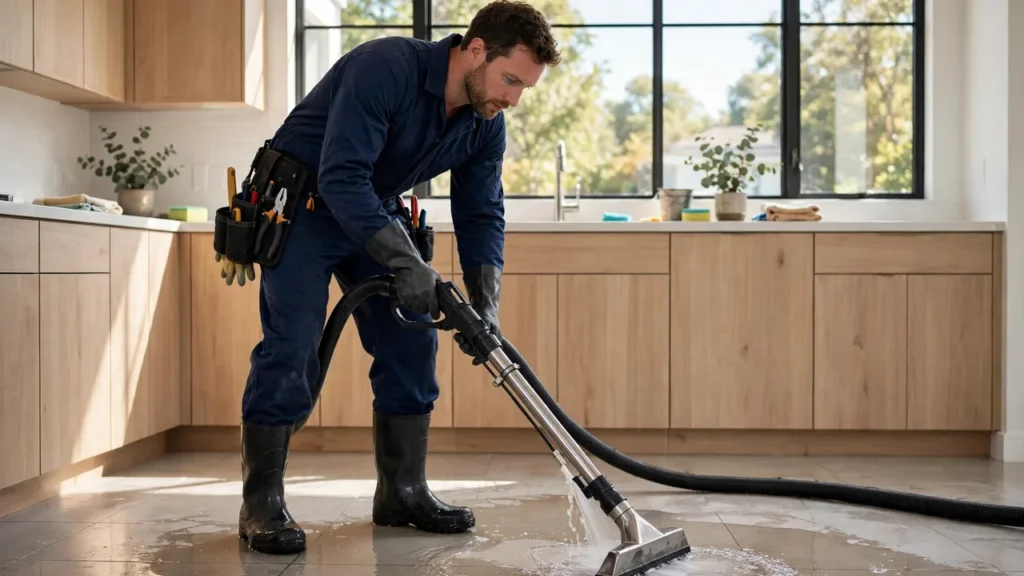
A mop or a shop vacuum handles a puddle. Extraction equipment handles a room. Pros use submersible pumps for deep water, weighted tools that pull water out of carpet padding, and hard-surface extractors for tile, wood and concrete. One flooded room can hold hundreds of gallons – and every gallon removed mechanically is a gallon that does not have to evaporate through your walls.
Extraction also gives the crew its first full look at the job. While the water comes out, the pro checks where it traveled, which materials it reached, and what the drying plan needs to be. That inspection shapes everything that happens next.
When you need water extraction
Call for extraction whenever water is standing, spreading, or trapped where you cannot reach it. The clear signs:
- Water is pooled on floors, in a basement, or in a crawl space.
- Carpet feels soaked, or squelches when you step on it.
- A pipe, appliance or water heater is still leaking, or has already flooded a room.
- Storm flooding has entered the house.
- Water marks are climbing a wall or spreading across a ceiling below a leak.
- A musty smell is developing, which means water has already sat too long.
If you are not sure, treat standing water as urgent anyway. Water that looks shallow can already be inside the subfloor and the wall cavities, and extraction in the first hours costs a fraction of extraction plus repairs a week later.
How our water extraction process works
Call and quick assessment
You describe what happened and where the water is. The pro arrives with pumps and extractors sized for the job, and shuts off the water source if it is still running.
Safety check and inspection
Power to wet areas is checked, hazards are flagged, and the crew maps how far the water spread with moisture meters before the first gallon is moved.
Pumping and extraction
Deep water is pumped out first. Then extractors pull water from carpets, padding, hard floors and tight spaces, working from the wettest areas outward.
Wet material decisions
Saturated padding, damaged drywall and other material that cannot be saved is identified and, where needed, removed – so the structure underneath can actually dry.
Handoff to drying
Extraction ends with the drying plan: air movers and dehumidifiers are placed, and moisture readings set the baseline the crew checks against until your home measures dry.
What affects the cost of water extraction
Extraction is usually the most affordable part of a restoration job – and the part that saves the most money later, because it shortens drying time and limits repairs. Most water damage jobs overall fall between $1,200 and $8,000, and four factors drive where yours lands:
| Cost factor | Why it matters |
|---|---|
| Size of the affected area | More rooms and more standing water mean more pumping time, more equipment, and more material to handle. |
| Type of water | Clean water from a supply line is straightforward. Storm water or sewage needs protective gear, sanitizing, and careful disposal. |
| How long the water sat | Water removed in the first hours has done little damage. Water that sat for days has soaked deeper and may already have mold growing. |
| Materials damaged | Tile and concrete give water up easily. Carpet, padding, hardwood and drywall hold it, and take longer to extract and dry. |
Always get an on-site estimate before work starts. A good pro explains the scope in plain language and documents the damage for your insurance claim.
Frequently asked questions
How long does water extraction take?
For most homes, the pumping and extraction itself takes 2 to 6 hours, depending on how much water there is and how many rooms it reached. Deep basement water can take longer. Extraction is only day one, though – drying equipment usually runs for 2 to 5 days after the standing water is gone.
Can I extract the water myself with a shop vacuum?
A shop vacuum is fine for a small spill – a few gallons on a hard floor. It is not built for a flooded room: it fills every few minutes, its suction cannot pull water out of carpet padding, and it does nothing about water inside walls. Pros finish in hours what takes a homeowner a weekend, and they verify that nothing is left hidden.
Do I need to leave my home during extraction?
Usually not. Most families stay in the home while extraction runs, as long as the water is clean and the electrical system is safe. If sewage is involved, or power has to stay off in living areas, the pro may suggest staying elsewhere until cleanup and sanitizing are done.
Will extraction damage my carpet or floors?
Extraction itself is gentle – it removes water, it does not tear anything up. What damages flooring is the water sitting in it. Fast extraction gives carpet and hardwood their best chance of being saved; floors that stay soaked for days are the ones that buckle, stain, and get replaced.
Does insurance cover water extraction?
Most homeowners policies cover extraction when the water came from a sudden, accidental event – a burst pipe, a failed water heater, an overflowing appliance. Damage from slow leaks or outside flooding is usually excluded without separate flood coverage. Pros document the water source, the affected materials, and the work done, which is exactly what your insurer asks for.
Standing water will not wait
Every hour of standing water means deeper soaking, more damage, and a bigger bill. Talk to a local extraction pro now – 24 hours a day, 7 days a week.
📞 Call Now for 24/7 Help: +1 (844) 954-0617