
Flood Cleanup
When storm water gets in, the mess is only half the problem – the other half is what the water carried with it. Local pros remove the water and debris, sanitize every surface, and dry the structure.
📞 Call Now - 24/7 Help: +1 (844) 954-0617What flood cleanup does
Flood cleanup is the full recovery of a home after water enters from outside – storms, overflowing rivers, heavy rain through a failed foundation, or a backed-up storm drain. It combines water extraction, debris and damaged-material removal, sanitizing, and structural drying in one coordinated job.
Outside water is never clean water. On its way in it picks up soil, fertilizer, fuel, sewage and chemicals, so anything it touched needs more than drying. Porous materials that absorbed flood water – carpet padding, drywall at the waterline, insulation, upholstered furniture – usually have to come out. Hard surfaces can be cleaned and disinfected.
Speed still matters more than anything. The sooner flood water and wet material are out, the less the structure absorbs, the lower the mold risk, and the more of your home can be saved.
When you need flood cleanup
If outside water crossed your doorstep, the cleanup standard is different from a clean-water leak. Call when:
- Storm or river water entered any part of your home – even an inch.
- Your basement or ground floor took water during heavy rain.
- Mud, silt or debris was left behind as the water went down.
- Flood water touched walls, carpet, furniture or stored belongings.
- A sewage or drain backup happened during the storm.
- There is a sour or musty smell after flooding, even if everything looks dry.
Even shallow flooding leaves contamination behind in padding, wall bottoms and floor joints. Treating it like ordinary water damage is how a cleaned-looking room stays an unhealthy one.
How our flood cleanup process works
Safety first
Electrical and gas risks are checked, and the crew confirms the water source has stopped or receded before anyone starts work inside.
Water and debris removal
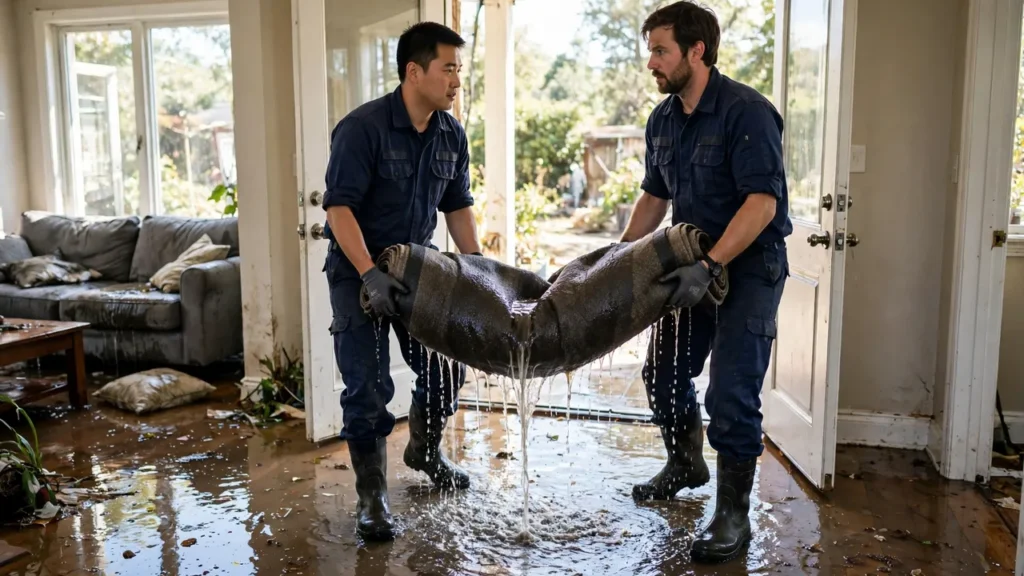
Standing water is pumped and extracted. Mud, silt and debris are cleared out so surfaces can be reached, cleaned and dried.
Damaged material removal
Flood-soaked porous materials come out at the waterline – padding, affected drywall, insulation and unsalvageable contents – and are disposed of safely.
Cleaning and sanitizing
Every remaining surface is cleaned and disinfected to deal with what outside water carried in, including bacteria and chemical residue.
Drying and documentation
The structure is dried to verified readings, and the crew documents the damage, the work and the disposal with photos and notes your insurer can use.
What affects the cost of flood cleanup
Flood cleanup costs vary more than any other water service, because no two floods bring the same water, depth or debris. Depth is the rough guide: an inch across a basement is a very different job from three feet through a ground floor. Four factors decide your number:
| Cost factor | Why it matters |
|---|---|
| Size of the affected area | More flooded rooms mean more extraction, more material removal, and more drying equipment. |
| Type of water | All flood water is treated as contaminated. Sewage involvement adds stricter protective gear, disposal rules, and sanitizing steps. |
| How long the water sat | Water that stood for days penetrated deeper, ruined more material, and usually started mold – all of which adds work. |
| Materials damaged | Concrete and tile clean up well. Drywall, insulation, carpet and wood absorb flood water and often must be removed and replaced. |
Ask for an itemized, on-site estimate – and take your own photos before anything is moved. They support your insurance claim or a disaster assistance application.
Frequently asked questions
Is flood damage covered by homeowners insurance?
Standard homeowners policies almost never cover water that comes from outside – rising rivers, storm surge, or surface water. That coverage comes from a separate flood insurance policy. Damage from a burst pipe inside the home is a different category and usually is covered. The pro’s documentation helps either way, and it is essential if you apply for disaster assistance.
Can carpet and furniture be saved after a flood?
Hard furniture can usually be cleaned and disinfected. Carpet is the hard case: the carpet itself sometimes survives professional cleaning, but the padding underneath almost never does after outside water – it holds contamination and has to go. Upholstered furniture that absorbed flood water is usually recommended for disposal.
How soon should flood cleanup start?
As soon as it is safe to enter – ideally within 24 hours. Every day of delay lets materials absorb more, lets mold establish, and can turn cleanable surfaces into tear-outs. If officials keep you out of the area, call anyway: after a storm, getting on a local pro’s schedule early matters, because the whole town is calling at once.
Do I need to throw away everything the water touched?
No. Non-porous items – glass, metal, hard plastic, sealed ceramics – clean up well. Porous items are judged case by case: solid wood often survives, while mattresses, pillows, stuffed toys and flood-soaked drywall do not. A good crew sorts contents with you instead of treating everything as trash.
What should I do before the cleanup crew arrives?
If it is safe: photograph everything, move dry belongings upstairs or out of the way, and keep people and pets out of the flooded area. Do not run electrical appliances in standing water, and do not start tearing out walls yourself – your insurer may want to see the damage exactly as it was found.
The water is down. The clock is not.
Flood damage gets worse every day it sits, and after a storm every crew’s schedule fills fast. Call now and get your home on the list.
📞 Call Now for 24/7 Help: +1 (844) 954-0617