Water Damage Restoration in Charleston, SC
Water Damage Restoration in Charleston, SC
24/7 emergency water damage help in Charleston, SC — fast water extraction, structural drying and cleanup from local licensed pros.
When you need water damage restoration in Charleston, you are in a city where the tide itself floods streets, where the Ashley and Cooper rivers meet the harbor under some of the oldest homes in America. WaterDamageGo connects Charleston homeowners with local licensed pros who handle extraction, structural drying, and cleanup, starting with one call at any hour of the day or night.
Charleston pairs landmark homes on the peninsula, from South of Broad to the French Quarter, with island communities on James Island and Johns Island and growth across West Ashley. Good water damage restoration in Charleston starts with finding the true source, because a raised Charleston Single fights water from the sky, the street, and the ground all at once.
📞 Call Now - 24/7 Help in Charleston: +1 (844) 954-0617What to do first if you find water damage in Charleston
Shut off the water at the main valve if a pipe or appliance is leaking, and switch off power to any wet room when it is safe. Photograph the damage before moving anything, keep children and pets away from the water, and call the same day, because mold can begin within 24 to 48 hours. When you call for water damage restoration in Charleston, ask about response time, equipment, and the drying process.
Water damage services in Charleston
Water Extraction
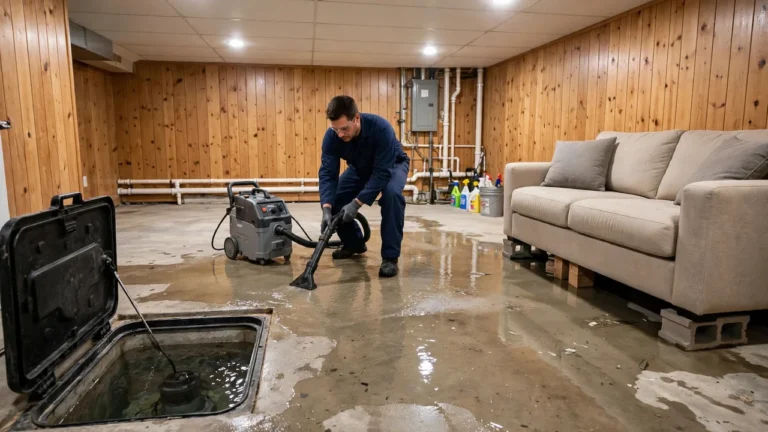
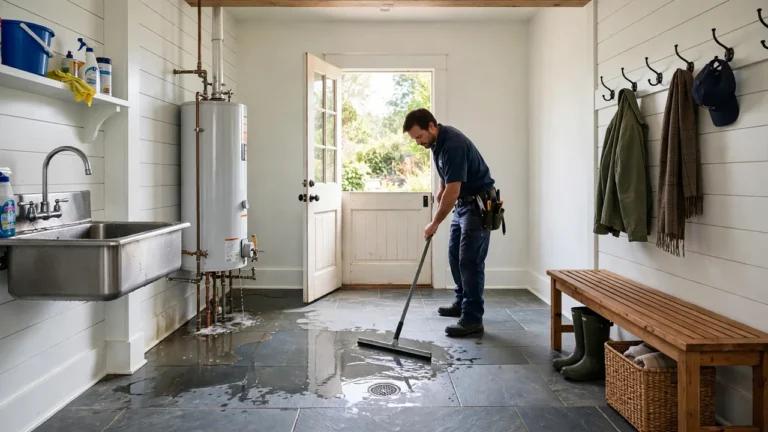
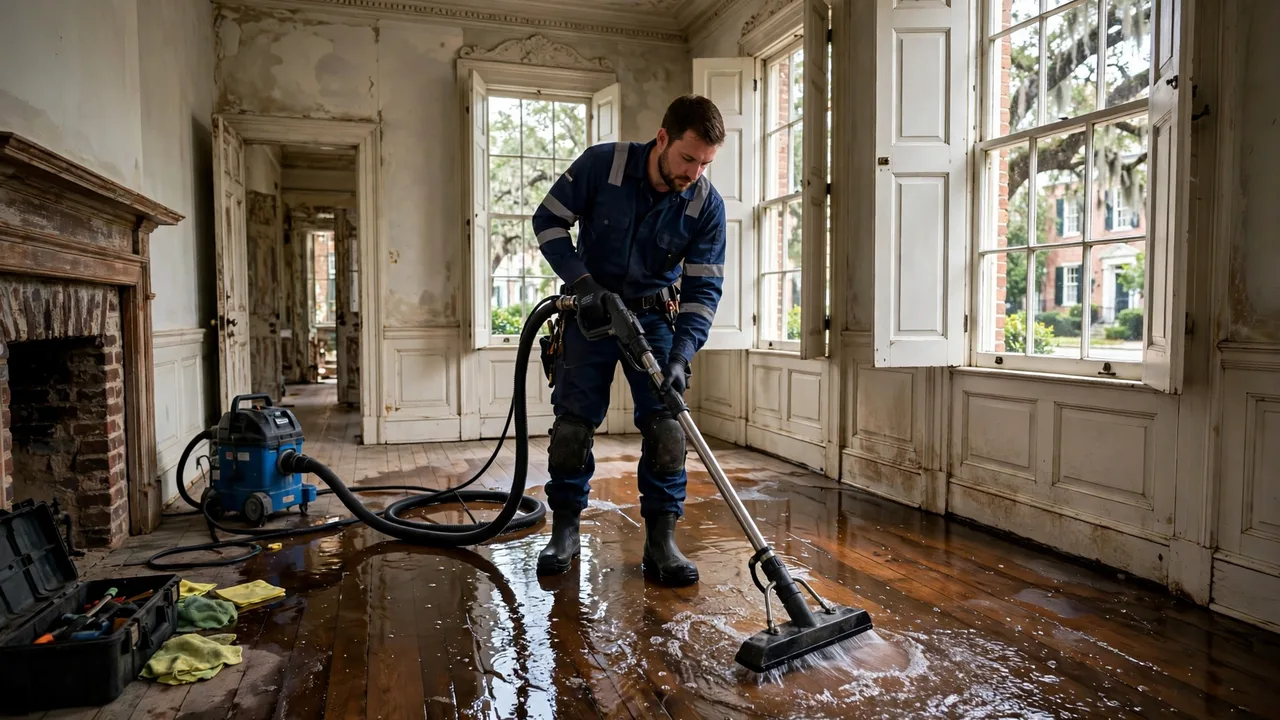
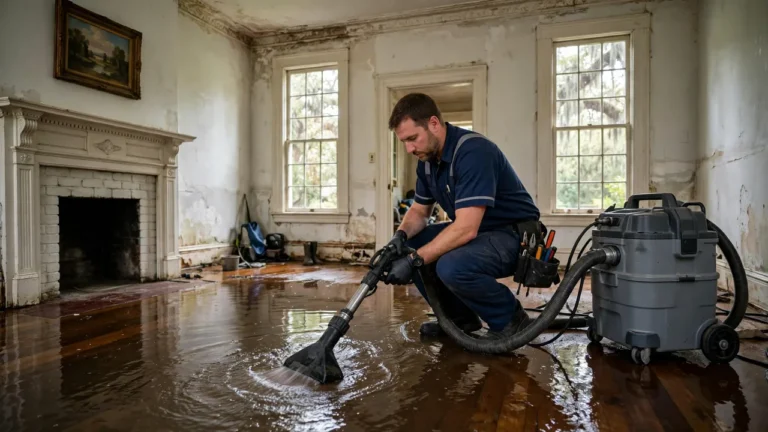
Crews remove standing water with pumps and extraction tools, then pull moisture from carpet, pad, and hard floors. Quick removal is the foundation of effective water damage restoration, because every hour of standing water pushes moisture deeper into subfloors and wall bases.
Structural Drying & Dehumidification
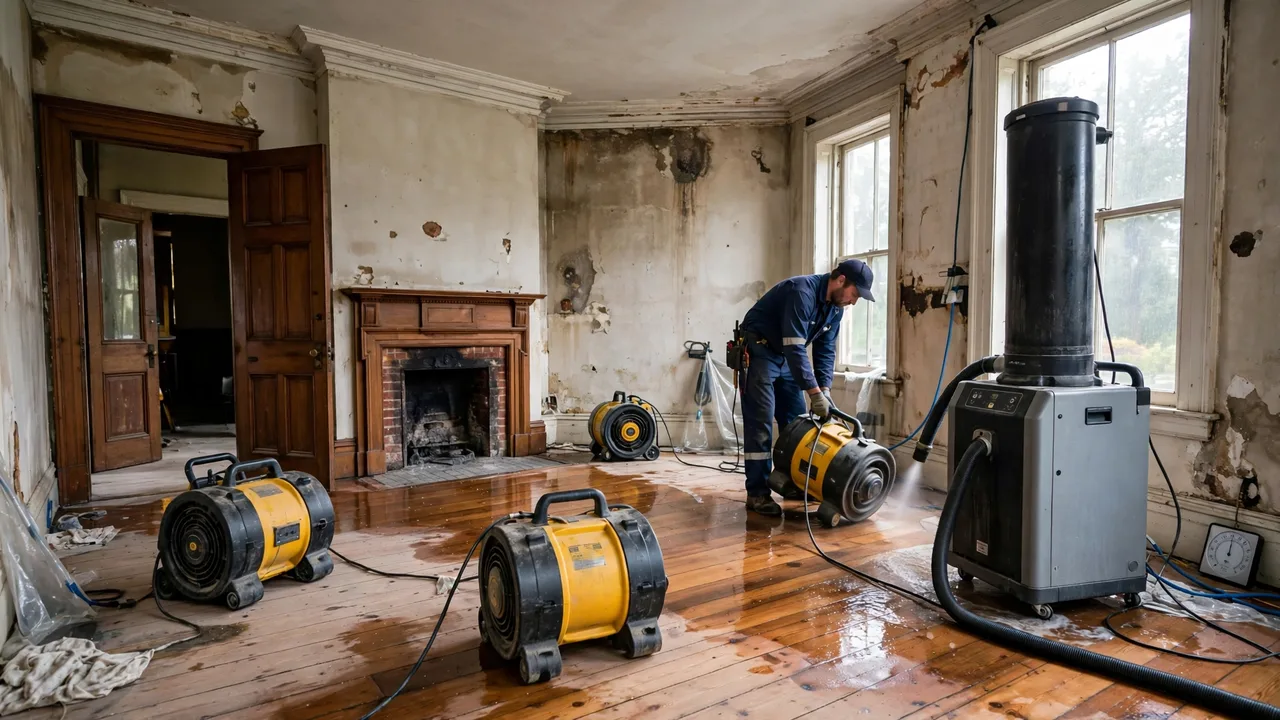
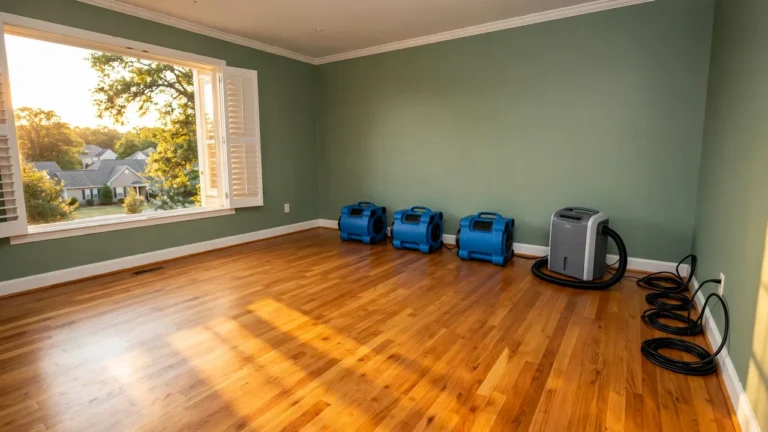
Industrial air movers and dehumidifiers dry framing, drywall, and flooring after extraction. Technicians set equipment by room size and moisture levels, then return to measure progress until readings reach normal. Water damage restoration in Charleston covers extraction, drying, cleanup, and moisture checks from start to finish.
Flood Cleanup
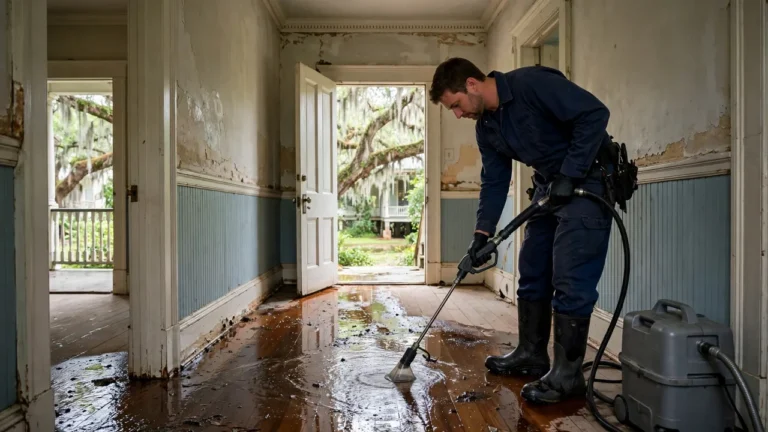
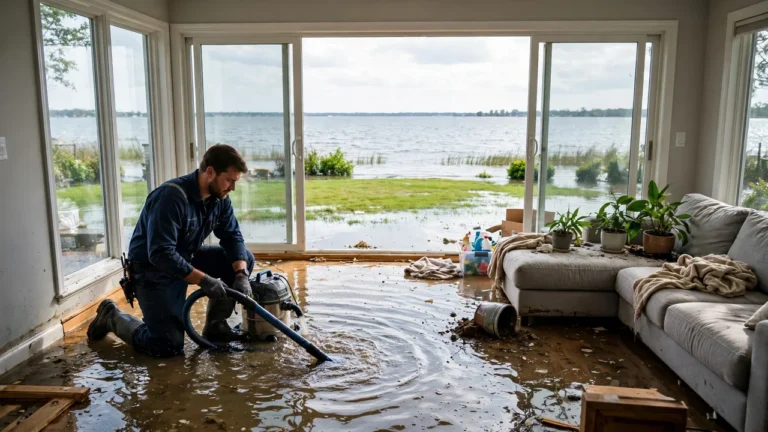
When flood water or storm runoff enters a home, crews remove silt and debris, take out unsalvageable materials, and clean and treat affected surfaces. In Charleston that often means tidal water or storm surge pushed through the harbor and up the rivers, so crews also check for salt and silt left under raised floors and in wall bases. The home is dried thoroughly before repairs are discussed.
Burst Pipe Water Damage
Many peninsula homes still carry plumbing threaded through centuries of additions, and those mixed-era lines can split or pinhole without warning. After the water is stopped, crews extract, dry inside walls when needed, and document the damage for your records. Homeowners choose water damage restoration in Charleston to stop mold growth before it starts spreading.
Sewage Cleanup
Sewer backups require protective equipment, controlled removal, and full disinfection of affected areas. Porous items touched by sewage are usually removed rather than cleaned, for health reasons.
Mold Remediation
Lowcountry heat and humidity let mold take hold in wet materials within days, especially in shaded crawl spaces beneath raised homes. Pros contain the area, remove affected material, and clean surrounding surfaces safely. With water damage restoration in Charleston, the goal is simple: remove the water, dry the structure, and make the home safe again.
Common causes of water damage in Charleston
Tidal flooding is a monthly fact of life on the peninsula. King tides push harbor water up through storm drains onto low streets, and when a high tide meets a hard rain, whole blocks take water; water damage restoration calls in the low areas follow the tide charts as much as the weather.
Hurricanes and tropical storms bring the big events. Surge funnels into the harbor and up both rivers, and even storms that miss Charleston directly can stack water against the coast for days, seeping into ground floors and crawl spaces across the islands. Water damage restoration in Charleston also checks for hidden moisture behind walls and under floors.
The housing stock is old and layered. Charleston Singles and historic homes carry plumbing from many eras in one structure, and slow leaks hide behind plaster, under heart-pine floors, and inside the piazzas’ enclosed ends for months.
The water table is never far below the surface. Long rains saturate the ground and push moisture up through crawl spaces across James Island, Johns Island, and West Ashley, wetting floor systems in homes that never see street flooding. After a leak or flood, Water damage restoration in Charleston gives you one clear path from cleanup to full recovery.
How much does water damage restoration cost in Charleston?
The ranges below reflect typical Charleston jobs and are meant as a planning guide, not a quote. A local pro will measure the affected area, identify the water source, and confirm the full scope in person before work begins, so you know what you are paying for.
| Job type | Typical range in Charleston |
|---|---|
| Small job (one room, clean water) | $625–$1,500 |
| Average job (several rooms) | $1,575–$5,500 |
| Large or severe job (whole home, sewage or mold) | $6,100–$17,000 |
What changes the price in Charleston
- Area size – drying one bedroom is a very different job from drying a whole ground floor and hallway.
- Water type – clean water from a supply line needs less protective handling than river flood water or sewage.
- How long water sat – a leak caught the same day may need drying only, while older damage often needs removal and repairs.
- Materials damaged – hardwood, laminate, cabinets, and drywall raise the cost more than concrete and tile, which tolerate water better.
Our water damage restoration process
Step 1 – Call and dispatch
One call, any hour, starts the process. You describe the leak or flood, a nearby pro is dispatched, and on arrival the crew begins water damage restoration by locating the source, checking for safety issues, and measuring how far moisture has traveled. The best Water damage restoration in Charleston combines quick action, honest pricing, and careful follow-up checks.
Step 2 – Inspection and moisture mapping
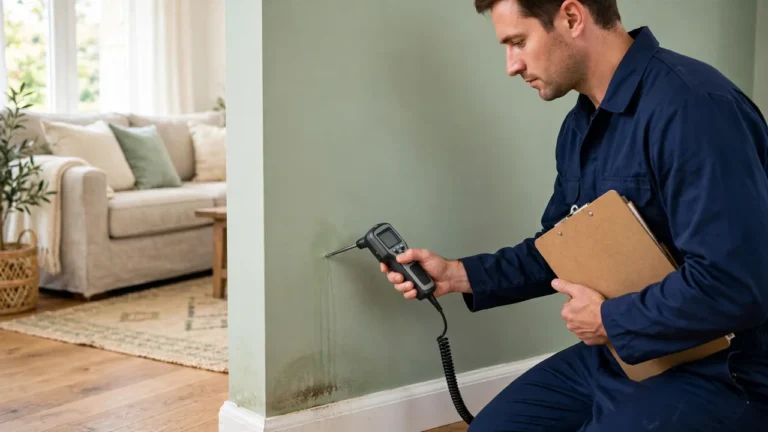
Meters and imaging tools map moisture in floors, walls, and ceilings, including spots that look dry on the surface. The crew photographs the damage and walks you through a clear plan and timeline.
Step 3 – Extraction, drying and cleaning
Pumps and vacuums remove standing water, then drying equipment runs until moisture readings reach normal levels. Affected surfaces are cleaned and treated, and unsalvageable material is removed in a controlled way. During water damage restoration in Charleston, technicians track moisture levels until the structure is fully dry.
Step 4 – Restoration and insurance documentation
After drying, repairs such as drywall patching, flooring replacement, and painting are handled or coordinated. You receive a documented file with photos, readings, and a list of completed work.
Why homeowners in Charleston call WaterDamageGo
Charleston homeowners call WaterDamageGo because a single number works around the clock, including during king-tide weekends and storm evacuations when local offices are closed or overwhelmed. You are connected with local licensed pros who understand tidal flooding, raised historic homes, and Lowcountry mold, and who explain water damage restoration honestly. Water damage restoration in Charleston matters most in the first 24 hours, when fast drying prevents the worst damage.
Crews serve neighborhoods across the area, from the peninsula and West Ashley to James Island, Johns Island, and Daniel Island. You get careful insurance documentation, straight guidance about what truly needs repair, and a crew that treats a one-room leak with the same seriousness as a tide-flooded ground floor.
Water damage restoration FAQs
Tidal water came into my ground floor but drained within hours. Do I still need a pro?
If it crossed the floor or soaked the crawl space, yes. Tidal water leaves salt and silt inside wall bases and under floors, and Lowcountry humidity will not dry those hidden spaces on its own. A moisture inspection with readings costs little; the mold and rot from repeated quiet tidal events is the expensive outcome.
Does homeowners insurance cover king-tide flooding in Charleston?
No. Water that rises from tides, surge, or rivers is flood damage, and standard policies exclude it entirely; a separate flood policy is the only coverage. Charleston’s mapped risk zones are extensive, and even homes outside them have taken tidal water. Pipe and appliance failures inside the home are the part standard policies usually cover.
How do you dry a raised Charleston Single without damaging historic materials?
Slowly and with constant measurement. Crews dry heart-pine floors with mat systems, vent wall bases through small hidden holes behind baseboards, and monitor plaster with meters rather than tearing in. The plan is built around saving original materials whenever readings allow, because replacing them changes both the home and the bill.
Why does my crawl space stay wet weeks after the street dries?
The peninsula and islands sit barely above the water table, so groundwater lingers under homes long after surface water leaves. Shade under a raised house slows evaporation further. Drying with directed airflow, treating affected wood, and adding a sealed vapor barrier or encapsulation keeps it from becoming a permanent moisture source.
We are buying a home on James Island. What water questions should we ask?
Ask about flood history and any insurance claims, check the crawl space for staining and past water lines, confirm the age of the water heater and supply lines, and review the flood map for the specific lot. A pre-purchase moisture inspection is inexpensive and tells you more than a fresh coat of paint ever will.
A leak or flood in Charleston rarely fixes itself, and waiting usually turns a drying job into a rebuilding job. One call connects you with a local licensed pro who can inspect the damage, explain the next steps in plain language, and start work sized to what your home truly needs. When you are ready, reach out and get Charleston water damage restoration started with a local pro you can trust.
📞 Call Now - 24/7 Help in Charleston: +1 (844) 954-0617Related help: explore our water damage services, see all service areas, or find help nearby in Water Damage Restoration in North Charleston, SC, Water Damage Restoration in Columbia, SC, Water Damage Restoration in Mount Pleasant, SC.
If you are in Columbia and dealing with the same problem, our water damage restoration in Columbia team is ready to help there too, with the same fast response and careful cleanup.
Similar Posts
 South CarolinaWater Damage Restoration in Rock Hill, SC
 South CarolinaWater Damage Restoration in North Charleston, SC
 South CarolinaWater Damage Restoration in Columbia, SC
 South CarolinaWater Damage Restoration in Summerville, SC
 South CarolinaWater Damage Restoration in Mount Pleasant, SC
 South CarolinaWater Damage Restoration in Mauldin, SC